Sometimes I believe an engineer’s capability should not be measured solely by how well they use structural analysis software.
Software can generate results, but it is the engineer who must determine whether those results are reasonable, safe, and compliant with the governing code. That ability comes from engineering knowledge and a solid understanding of design codes.
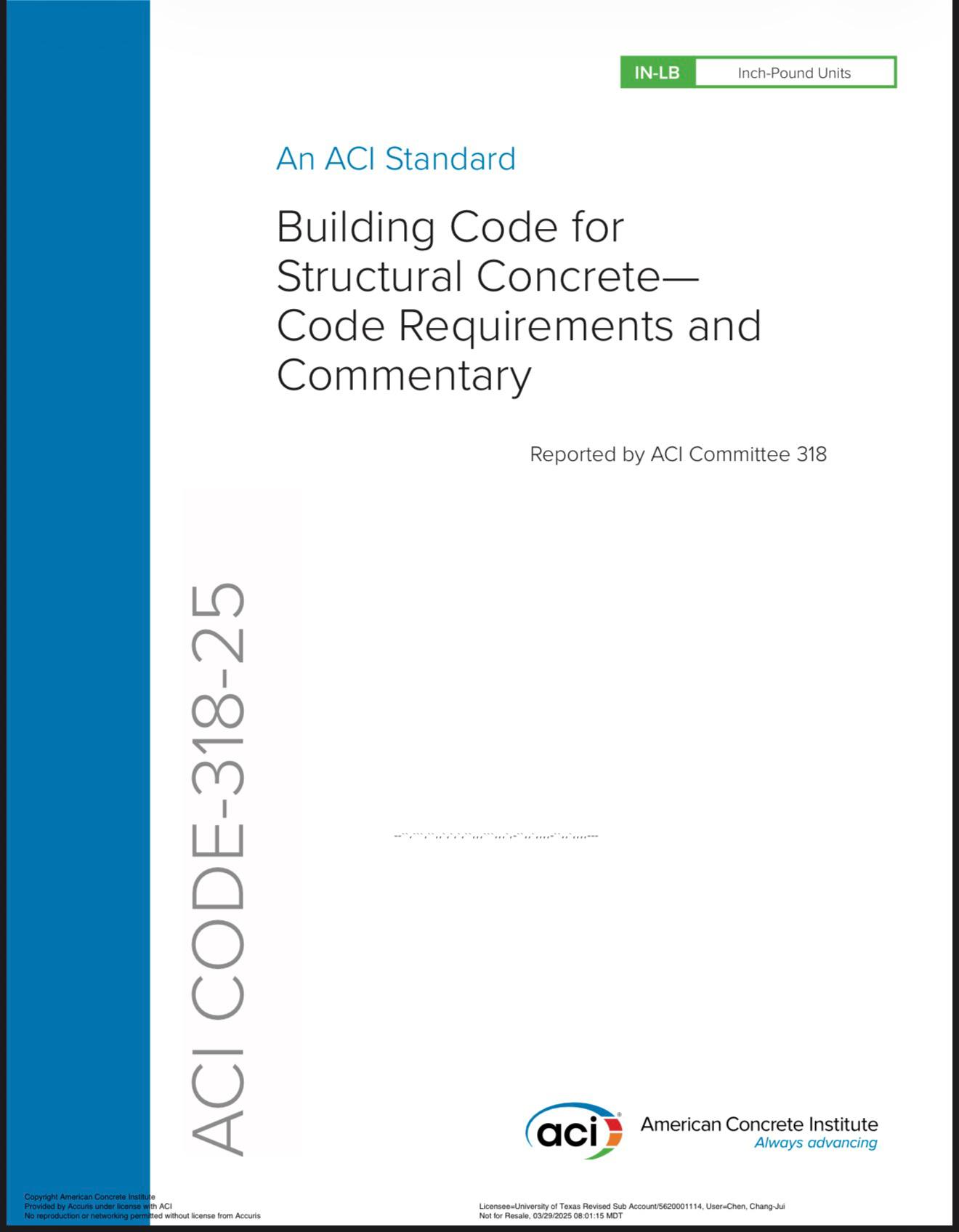
Recently, I had the opportunity to study ACI 318-25 – Building Code Requirements for Structural Concrete and Commentary.
As the latest edition of one of the world’s most widely recognized concrete design standards, ACI 318-25 provides comprehensive requirements for the design and detailing of reinforced concrete structures, including beams, slabs, columns, walls, foundations, shear, development length, and seismic detailing.
One of the most valuable parts of this book is the Commentary. Rather than simply presenting code provisions, it explains the engineering principles and reasoning behind them. Understanding why a requirement exists is just as important as knowing what the requirement is.
For structural engineers practicing in Myanmar, however, studying ACI 318-25 alone is not enough.
It should be read alongside the Myanmar National Building Code (MNBC) 2025, which serves as the governing building code for local projects. MNBC establishes the regulatory requirements applicable to engineering practice in Myanmar, while ACI 318-25 provides updated international design philosophy, technical guidance, and best practices for reinforced concrete structures.
In my opinion, the best approach is simple:
Follow MNBC 2025 for compliance with local regulations.
Study ACI 318-25 to continuously improve your technical knowledge and stay current with modern structural engineering practices.
There is a significant difference between knowing a code and understanding a code. The latter enables engineers to make sound engineering judgments rather than relying blindly on software outputs.
As engineers, learning never truly ends. Graduation is only the beginning of a lifelong journey of professional development.
I highly recommend this book to structural engineers, design engineers, checking engineers, and civil engineering students who are committed to strengthening their technical knowledge and advancing their engineering careers.